
• Skip to Content
  • Skip to Main Navigation
  • Skip to Search

Indiana University Bloomington Indiana University Bloomington IU Bloomington

Open Search
  • Program Overview
  • People
    • Affiliate Faculty
    • Emeriti Faculty
    • Administration
    • Faculty Advisory Committee
  • Courses
    • Archived Courses
      • Courses
  • Ph.D. Minor
    • C790: Independent Readings
    • Cultural Studies Minor Declaration
    • Cultural Studies Minor Verification
    • Travel Funding Opportunities
    • Graduate Essay Prize
  • Cultural Studies Lecture Series
    • Co-Sponsored Events
    • Other Events
    • Archived Conferences
      • 2017 Conference
      • 2016 Conference
      • 2018 Conference
      • 2015 Conference
      • 2014 Conference
      • 2013 Conference
    • Past Events
      • 2024-2025
        • Cinema and Extinction Speakers
        • Spring 2025 Events: Planetary Futures and Cinema & Extinction Symposium
      • CULS Events 2023-24
      • CULS Events 2022-23
      • CULS Events 2021-22
      • CULS Events 2020-21
      • CULS Events 2019-20
      • CULS Events 2018-19
      • CULS Events 2016-17
  • Newsletters
  • Contact Us

College of Arts + Sciences

Cultural Studies Program

  • Home
  • Program Overview
  • People
    • Affiliate Faculty
    • Emeriti Faculty
    • Administration
    • Faculty Advisory Committee
  • Courses
    • Archived Courses
  • Ph.D. Minor
    • C790: Independent Readings
    • Cultural Studies Minor Declaration
    • Cultural Studies Minor Verification
    • Travel Funding Opportunities
    • Graduate Essay Prize
  • Cultural Studies Lecture Series
    • Co-Sponsored Events
    • Other Events
    • Archived Conferences
    • Past Events
  • Newsletters
  • Search
  • Contact Us
  • Home
  • News & Events
  • Past Events
  • 2024-2025
  • Stefanie Dunning

Planetary Futures: Stefanie Dunning

Wednesday, October 16, 2024

6:30 PM – 8:30 PM

The Bishop Bar
123 S Walnut St, Bloomington
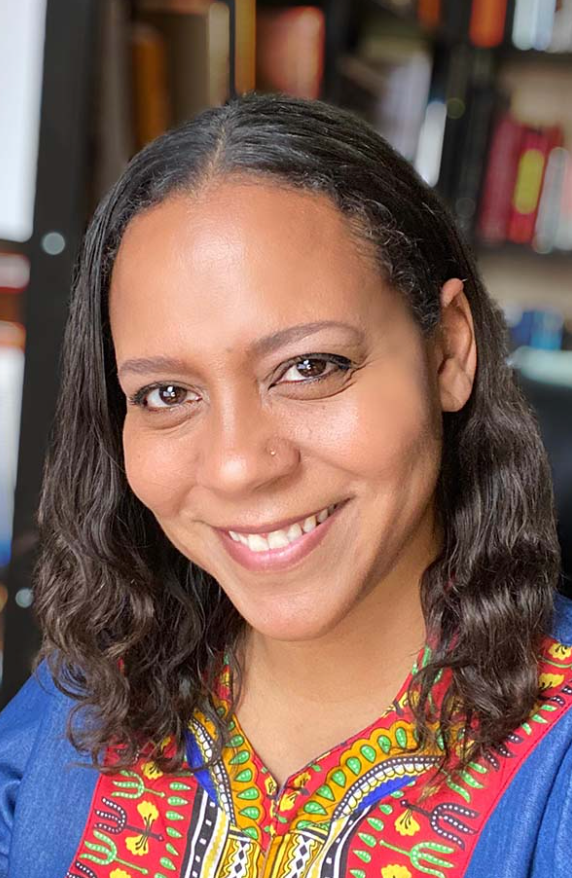
Stefanie Dunning

"The Ontology of the Ship: Celestial Ecologies in Tade Thompson’s Rosewater and Octavia Butler’s Dawn"

In 2021, after traveling to space for 11 minutes, Jeff Bezos declared at a press conference that “We need to take all heavy industry, all polluting industry, and move it into space. And keep Earth as this beautiful gem of a planet that it is.”[1] Outer space, in current popular discourse—from films and televisual depictions to real-life initiatives such as those spearheaded by Bezos, Elon Musk, and Richard Branson—is the site of a range of narratives about the environment, about human “evolution,” and about exploration. One such narrative suggests that the earth will soon be uninhabitable and so we must find another planet to colonize; here, Bezos reverses that formulation to suggest that we pollute space to preserve earth’s beauty and habitability. But this solution to our ecological problems suggests that space itself is not ecological and is somewhat separate from nature, already a barren wasteland.

This essay undermines the tendency to view outer space as dead and empty by demonstrating that this category of thinking about the celestial elsewhere aligns with the Enlightenment split of man from nature articulated by Francis Bacon and others, who also theorized nature as inanimate and unalive in ways that ushered in the ethos of ecological destruction that has characterized Western society ever since.[2] I suggest in this essay that the contemporary corporate space race is repetitionary of not only the ideology of the West relative to the natural world but that the consequences of such initiatives are likely to be destructive of the broader ecology—which, in my formulation includes outer space—in much the same way it has been on earth.   

This fractured Enlightenment ecological illogic also structures our assumptions about what space travel is and how it can be accomplished; generally, we assume that an encounter with the celestial elsewhere can only be achieved through the mechanical—technology, rockets, propulsion engineering, and the like. In this essay, I consider the work of two black writers, Tade Thompson’s Rosewater (2016) and Octavia Butler’s Dawn (1987), whose imagined encounters with the celestial elsewhere are rooted in an organic encounter with living beings. In both texts, the ships used by the aliens are alive—not mechanical vessels whose intended goal is to get us to outer space and can only be understood as opposing life given the environmental devastation they entail—but are instead living beings themselves that symbiotically support life for “itself/themselves” and for any beings that live or travel within its/their body. Both Thompson and Butler’s conceptions of outer space rely upon an ethos that is antithetical to the machine-centered technological obsession of the West, which subverts the broader anti-nature orientation of the West and suggests that even in the context of space exploration and/or contact, Earthlings must alter both their understanding and relationship to the natural world, which includes, rather than excludes, outer space itself. 

[1]https://www.businessinsider.com/jeff-bezos-move-all-polluting-industry-into-space-blue-origin-2021-7

[2] I discuss this idea at length in Black to Nature: Pastoral Return and African American Culture. (University Press of Mississippi, 2021).


Stefanie Dunning is an associate professor of English at Miami University of Ohio.

In August of 2022, Scientific American magazine opined that “This Hot Summer is One of the Coolest of the Rest of Our Lives.” This attitude also animated a popular meme. In the original scenes from The Simpsons, Bart laments that he is having the worst day of his life and Homer comforts him by reminding him that it is merely the worst day yet. The meme turns Bart’s complaint into an apt quip about the Anthropocene. “This is the hottest summer of my life,” says Bart. “This is the hottest summer of your life so far,” Homer replies. And indeed, as predicted, the summer of 2023 was hotter than the year before.

The Simpson meme’s despairing pessimism would seem to mark the end of the longstanding attitude that has motivated so much environmental activism: the future of life on Earth must be saved and we have only narrow window of time to save it. In this drama of rescue, the future is already known. If we succeed in implementing policy changes to stop the production of fossil fuel emissions, then the future is this, but better. Realistically, and increasingly commonly, it is this, but worse. Neither option admits of a future that is not yet known or is radically discontinuous from the present. 

For speakers in this lecture series, current practices and their effects on the future are far stranger than such a scenario allows. From hormone dispersion in the waterways to de-extinction technologies, the speakers in the Planetary Futures series tell stories of the weird critters that might emerge from the strange chemical soups of the present, they consider the odd feelings that come from such uncertain futures, and they interrogate the colonial histories, neoimperial presents, and sexual and racial metaphysics that underpin, distort, reject, and reimagine the notion of futurity as such. Drawing on theories of queer temporality, Black studies, postnatural aesthetics, and feminist science, our speakers consider the planet from the speculative vantage of its potential future inhabitants, rather than from the abstraction life, to highlight the tangle of relations at stake in every imagining of the planet.

  • Co-Sponsored Events
  • Other Events
  • Archived Conferences
  • Past Events
    • 2024-2025
      • Cinema and Extinction Speakers
      • Spring 2025 Events: Planetary Futures and Cinema & Extinction Symposium
    • CULS Events 2023-24
    • CULS Events 2022-23
    • CULS Events 2021-22
    • CULS Events 2020-21
    • CULS Events 2019-20
    • CULS Events 2018-19
    • CULS Events 2016-17

Cultural Studies Program

Indiana University Bloomington
Ballantine Hall 416
Bloomington, IN 47405

cstudies@indiana.edu

Cultural Studies Program social media channels

Indiana University

Accessibility | College Scorecard | Open to All | Privacy Notice | Copyright © 2025 The Trustees of Indiana University

  • Program Overview
  • People
    • Affiliate Faculty
    • Emeriti Faculty
    • Administration
    • Faculty Advisory Committee
  • Courses
    • Archived Courses
      • Courses
  • Ph.D. Minor
    • C790: Independent Readings
    • Cultural Studies Minor Declaration
    • Cultural Studies Minor Verification
    • Travel Funding Opportunities
    • Graduate Essay Prize
  • Cultural Studies Lecture Series
    • Co-Sponsored Events
    • Other Events
    • Archived Conferences
      • 2017 Conference
      • 2016 Conference
      • 2018 Conference
      • 2015 Conference
      • 2014 Conference
      • 2013 Conference
    • Past Events
      • 2024-2025
        • Cinema and Extinction Speakers
        • Spring 2025 Events: Planetary Futures and Cinema & Extinction Symposium
      • CULS Events 2023-24
      • CULS Events 2022-23
      • CULS Events 2021-22
      • CULS Events 2020-21
      • CULS Events 2019-20
      • CULS Events 2018-19
      • CULS Events 2016-17
  • Newsletters
  • Contact Us